Chocolate Sourcing Blog
Introduction
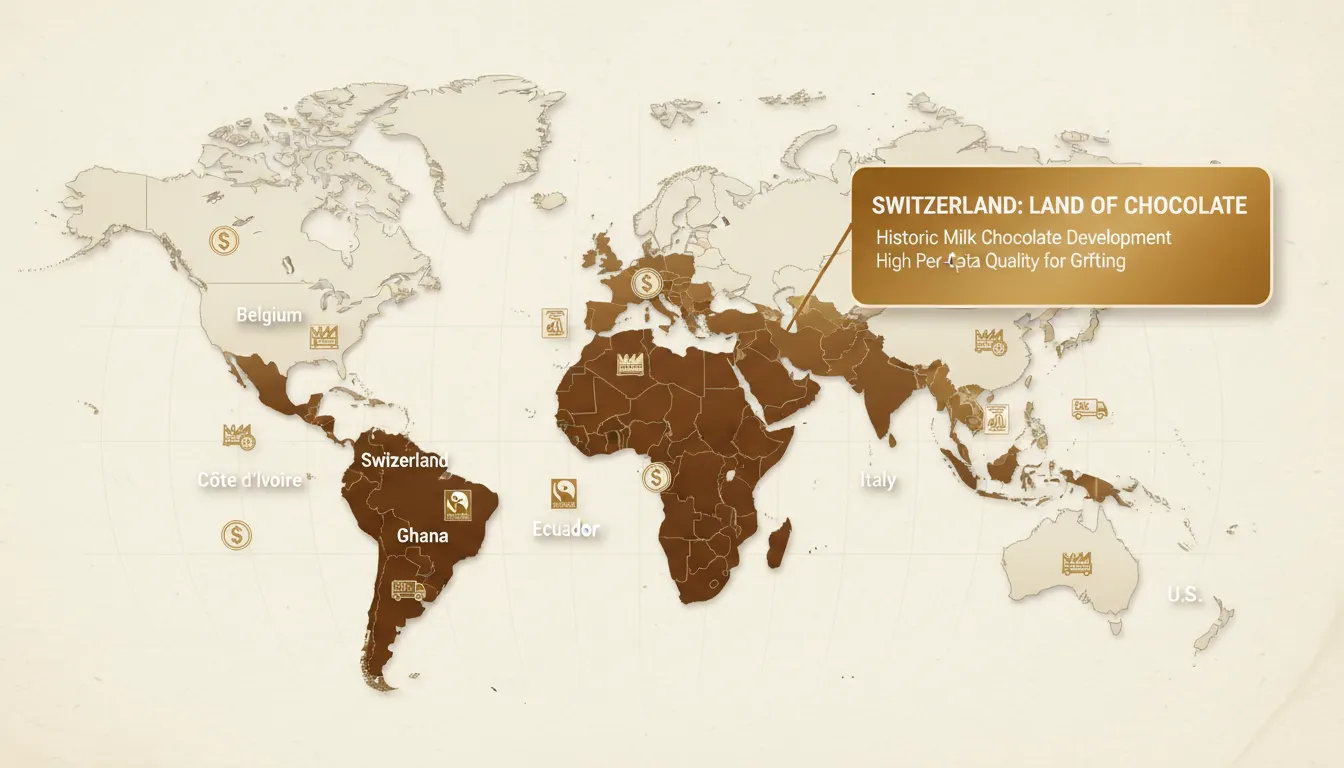
**Country known for chocolate** sourcing spans Belgium, Switzerland, Ecuador, Côte d’Ivoire/Ghana, Italy, the UK, and the U.S.; for private‑label buyers, the “best” origin is the one that balances target price, production capacity, required certifications, customization options, and logistics reliability for the program.
What “best chocolate” means for retail procurement
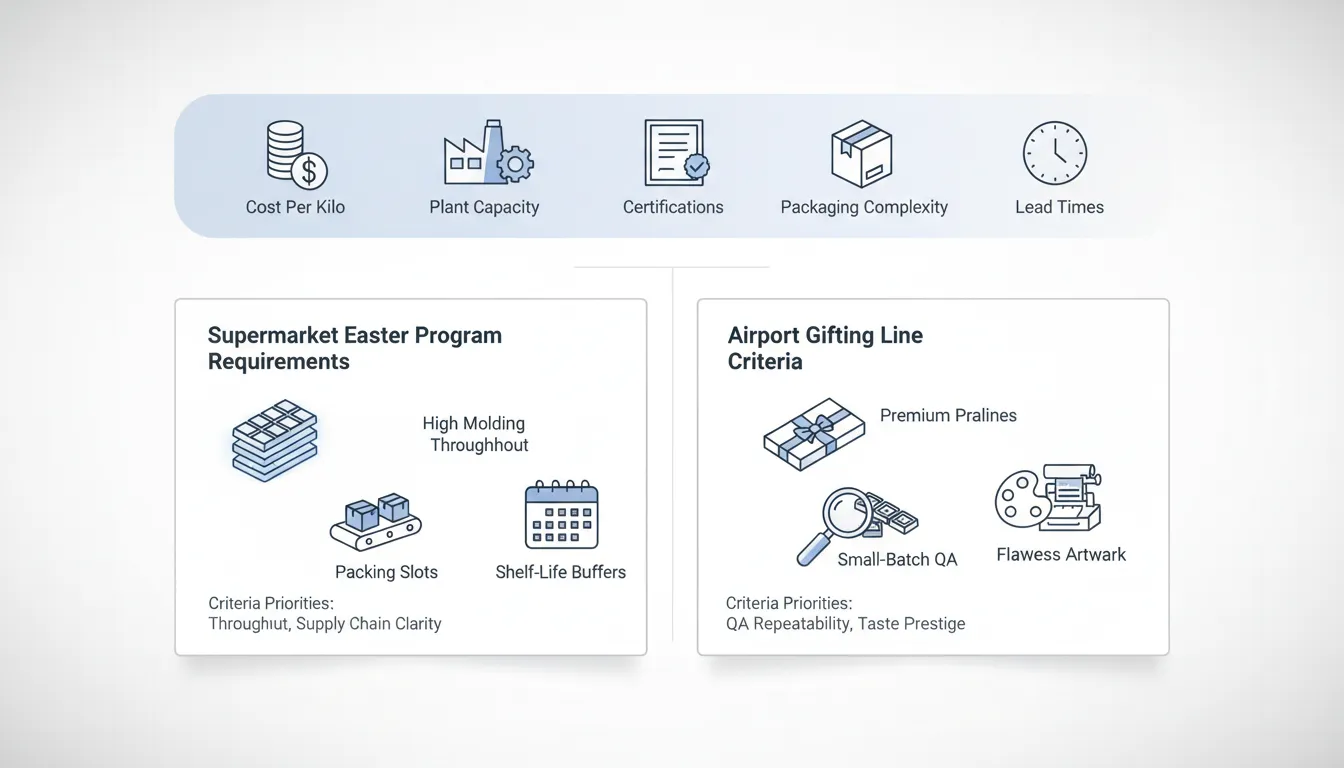
For private‑label and co‑packed lines, “best” is a fit‑for‑purpose decision: cost per kilo, plant capacity, necessary certifications, packaging complexity, and realistic lead times. Procurement teams prioritize predictable throughput, repeatable QA, and supply‑chain clarity over taste prestige alone.
Consider two examples: a supermarket Easter program requiring 100,000 hollow figures in eight weeks needs high molding throughput, stable packing slots, and conservative shelf‑life buffers. An airport gifting line of premium pralines requires exquisite finish, small‑batch QA, and flawless artwork/print control. We support seasonal volumes, artwork development, and DDP delivery to reduce logistics friction.
Countries known for chocolate and how they fit private‑label programs
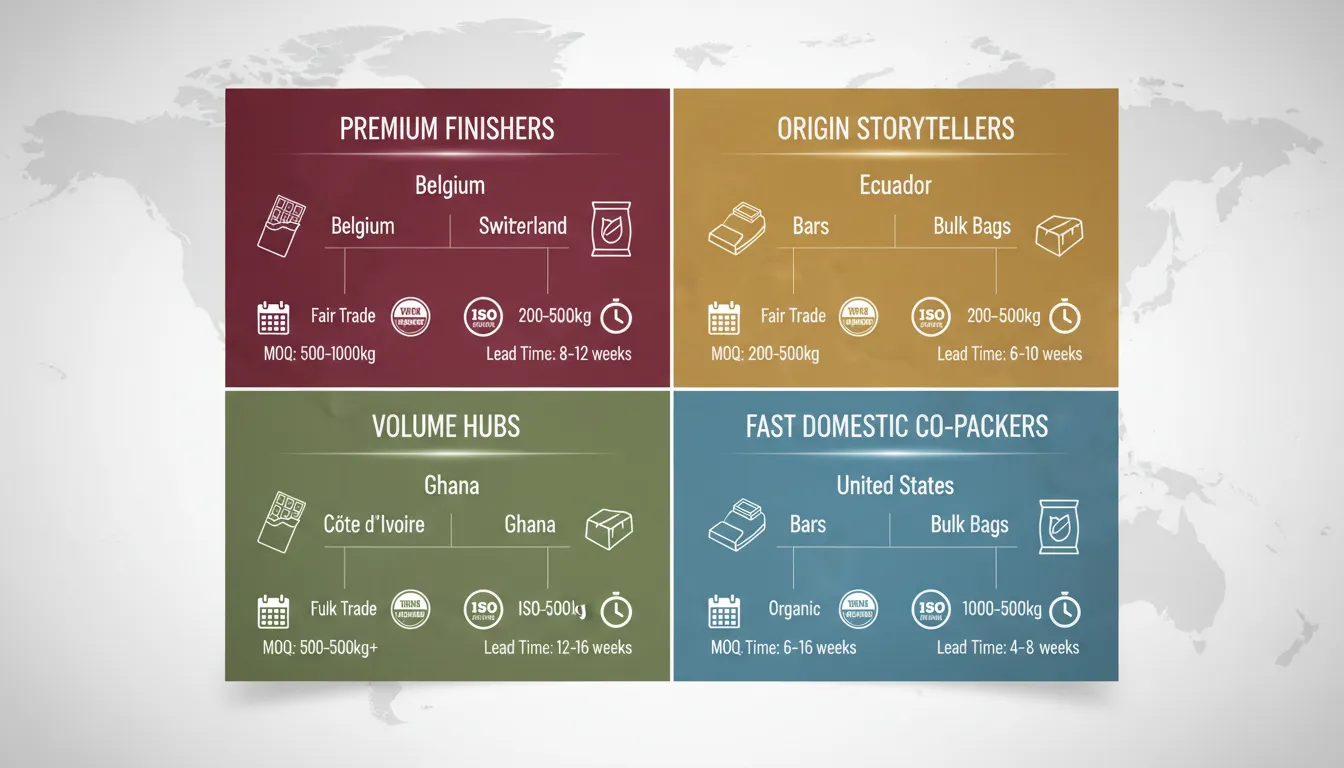
For buyers, national reputations map to specific sourcing roles: premium finishers, origin storytellers, volume hubs, and fast domestic co‑packers. Use these snapshots to match origin strengths to your program’s requirements (format, certifications, MOQ/lead time).
Belgium — premium pralines and gifting
belgium known for chocolate signals hand‑finished pralines and luxury assortments used in travel retail and gifting.
- Ideal formats: rigid‑box praline assortments, high‑end tablets, hotel amenity boxes with bespoke inserts.
- Certifications/QA norms: BRCGS/IFS common; strict retailer audits and very low tolerance for finish defects.
- MOQ/lead‑time bands: moderate‑to‑high MOQs; artwork and approval cycles push typical lead times to 6–10+ weeks, especially ahead of gifting seasons.
Switzerland — milk‑chocolate specialists
Swiss hubs deliver silky milk chocolate with rigorous QA and full traceability.
- Ideal formats: heritage tablets, travel‑retail multipacks, airline snack‑size bars with portion control.
- Certifications/QA norms: GFSI‑aligned (BRCGS/IFS), extensive shelf‑life validation and traceability documentation.
- MOQ/lead‑time bands: premium pricing, mid‑range MOQs; plan for 5–10 week cycles from final art to ex‑factory.
Ecuador — fine‑aroma at origin
Ecuadorian producers emphasize fine‑aroma cocoa, origin storytelling, and bean‑to‑bar credentials.
- Ideal formats: origin tablets, café tablet lines with tasting notes and provenance panels.
- Certifications/QA norms: good access to Organic and Rainforest Alliance; single‑origin traceability supports CSR claims.
- MOQ/lead‑time bands: modest MOQs for origin runs; expect 6–8 weeks when produced locally or regionally.
Côte d’Ivoire & Ghana — volume origins, growing finished‑goods hubs
West Africa supplies bulk cocoa and increasingly hosts local processing for finished goods.
- Ideal formats: value bars, single‑serve convenience formats, inclusions and coatings at scale.
- Certifications/QA norms: common buyer requirements include Rainforest Alliance/Fairtrade and deforestation/traceability clauses; GFSI systems are growing.
- MOQ/lead‑time bands: high MOQs suited to large runs; lead times vary and should include conservative buffers for shipping and customs.
Italy — gianduja, premium tablets, seasonal figures
Italian makers excel at gianduja, seasonal molds, and refined presentation.
- Ideal formats: gianduja tablets, molded holiday figures, café and boutique assortments.
- Certifications/QA norms: BRCGS/IFS presence; strong nut‑handling and allergen controls.
- MOQ/lead‑time bands: mid‑range MOQs; artwork‑to‑ship timelines commonly 4–8 weeks, longer for complex molds.
United Kingdom — heritage brands and contract manufacturers
uk chocolate companies anchor many supermarket own‑label programs with strong retailer compliance.
- Ideal formats: own‑label tablets, HFSS‑compliant recipes, multipacks for UK/EU shelves.
- Certifications/QA norms: BRCGS baseline, retailer audits, HFSS‑labeling experience and UK/EU nutrition panels.
- MOQ/lead‑time bands: MOQs tuned for grocers and discounters; typical 4–8 week lead times for repeatable formats.
United States — scale, speed, and regional options
top chocolate companies in the us operate alongside many co‑packers, offering speed and flexible MOQs.
- Ideal formats: national seasonal promotions, airport multipacks, snack‑size bars, better‑for‑you lines.
- Certifications/QA norms: FSMA/FDA readiness, GFSI schemes (SQF/BRCGS), UPC/traceability norms for major retailers.
- MOQ/lead‑time bands: generally flexible MOQs; domestic runs often fall in the 3–6 week band with temperature‑controlled lanes.
Spain — bean‑to‑bar and private‑label capacity
spanish chocolate companies balance bean‑to‑bar pedigree with competitive private‑label facilities.
- Ideal formats: minibars, value‑to‑premium tablets, bilingual packs for tourist zones.
- Certifications/QA norms: BRCGS/IFS common; experience in multi‑language artwork and EU labeling.
- MOQ/lead‑time bands: balanced MOQs; expect 5–8 weeks from artwork lock to dispatch for most SKUs.
Cost, lead times, and MOQs by region (comparison table)
| Region | Typical MOQ* | Lead Time (new projects) | Cost Tier | Best For |
|---|---|---|---|---|
| US domestic co‑packers | ~3,000–10,000 units | 3–6 weeks (repeat), 5–8 weeks (new) | Mid | Fast national promos and seasonal pivots |
| Western Europe (BE/CH/IT/UK/ES) | Pallet‑scale for stock SKUs; higher for custom recipes | 6–10 weeks | Mid–Premium | Premium gifting, travel retail, complex packaging |
| Latin America origin (e.g., Ecuador) | ~3,000+ units | 6–8 weeks | Mid–Premium | Origin tablets and provenance ranges |
| West Africa (Côte d’Ivoire/Ghana) | Higher MOQs for finished goods | 8–12 weeks (including shipping) | Value | Large‑volume value bars and base chocolate |
*Typical private‑label starting points; individual suppliers vary. Our fast‑track programs and flexible MOQ options can sit below these bands to help you test concepts sooner.
Compliance and certifications by market
Compliance must be verified early. Request full documentation sets: current certificate, last‑audit summary, HACCP validation, allergen matrix, CoAs and traceability linkage.
- EU/UK: BRCGS/IFS scope, nutrition/allergen panels, HFSS evidence where applicable, and retailer technical approvals.
- U.S.: FDA/FSVP documentation, FSMA readiness, shelf‑life validation, CoAs and third‑party lab results as required.
- Canada: CFIA requirements, bilingual labeling where needed, CoAs, and establishment numbers.
- Sustainability claims: Organic, Rainforest Alliance/UTZ, Fairtrade, RSPO — require chain‑of‑custody numbers and lot‑linked CoAs.
We maintain a consolidated certification stack and offer on‑demand audit support to help procurement and QA close retailer technical approvals quickly.
Packaging and customization capabilities
Treat packaging as a menu of formats and timelines so artwork doesn’t delay launch:
- Formats: tablets, bars, minis (flow‑wrap), pralines and rigid boxes, seasonal molds and hollow figures.
- Print methods: digital for short or multi‑SKU seasonal runs (1–2 weeks from final art), flexo/litho for high volumes (3–6 weeks including plates and makeready).
- Materials & sustainability: recyclable mono‑material films and coated papers; allow 2–6 weeks for barrier trials and shelf‑life checks.
- Tooling: custom molds add 3–6 weeks for samples; sleeves and rigid boxes add standard print timing.
To speed approvals, request our downloadable dielines and artwork templates to shave days from the approval loop and lock art earlier in the calendar.
Logistics and risk management
Logistics planning must cover duties, Incoterms, temperature control, QC on arrival, and seasonal peak risks to avoid melts and launch delays. Key operational controls include selecting the right Incoterm (DDP to simplify vendor responsibility), planning temperature‑controlled lanes for summer months, and defining shelf‑life buffers plus arrival QC checks.
Regional logistics matrix (high level):
| Region | Duty | Ideal Incoterm | Cold‑chain need | Peak‑season risk |
|---|---|---|---|---|
| United States (domestic) | Low import duty | DDP or EXW with 3PL | Moderate (summer lanes) | High demand spikes around holidays; short lead times |
| Western Europe | VAT & customs on imports | DDP or DAP | Low–moderate | Gifting seasons (Q4) and Easter; port congestion |
| West Africa (finished goods) | Variable; watch tariff rules | DDP recommended | High if shipping finished chocolate | Port delays, longer shipping windows |
| Latin America (origin‑finished) | Variable | DDP or CIF for origin runs | Moderate–high | Harvest season impacts and shipping availability |
We offer DDP options, summer‑shipping protocols, and arrival QC checklists to reduce customs holdups and product losses. Build temperature buffers into contracts and specify pallet manifest and inspection gates for high‑risk lanes.
Supplier discovery: lists and regional directories (starter points)
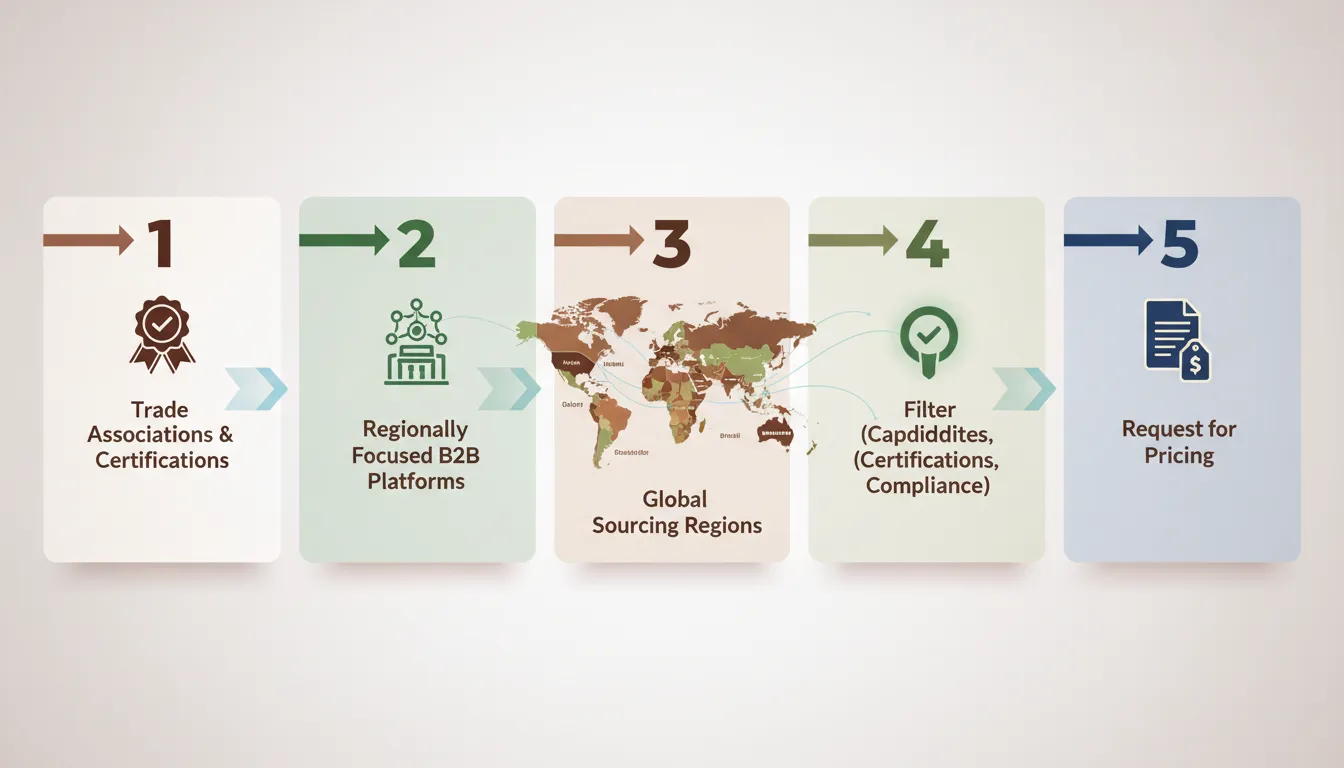
Start discovery with trade associations, certification directories, and regionally focused B2B platforms. Structure your scan by geography, then filter candidates by capabilities, certifications, and regulatory fit before requesting pricing.
Build your shortlist (sources and criteria)
Begin with trade associations and certification lists (for example, confectionery trade bodies and the BRCGS directory) and layer in regional sourcing platforms and retail buying groups. Use this 7‑point RFP checklist when contacting suppliers:
- Product scope and formats (bars, tablets, pralines, seasonal figures).
- Forecast volumes, seasonality, and peak windows.
- Required certifications (BRCGS/IFS, Organic, Fairtrade/RA, Kosher, Gluten‑free).
- Target markets and labeling rules (FDA/FSVP, EU, UK HFSS, travel‑retail).
- Packaging, artwork, and language needs (including sustainability claims).
- Logistics expectations (Incoterms, temperature control, lead times).
- Commercial terms: MOQs, price bands, payment and tooling costs.
We can provide a sample brief template to accelerate your RFP and artwork handoff.
United States — national overview
Start with national confectionery trade bodies and co‑packer listings. Prioritise partners that document FSMA‑aligned programs and rapid seasonal changeover capability.
United States — California
Filter West Coast listings for organic, plant‑based and vegan lines plus chilled or ambient distribution into Pacific markets.
United States — New York
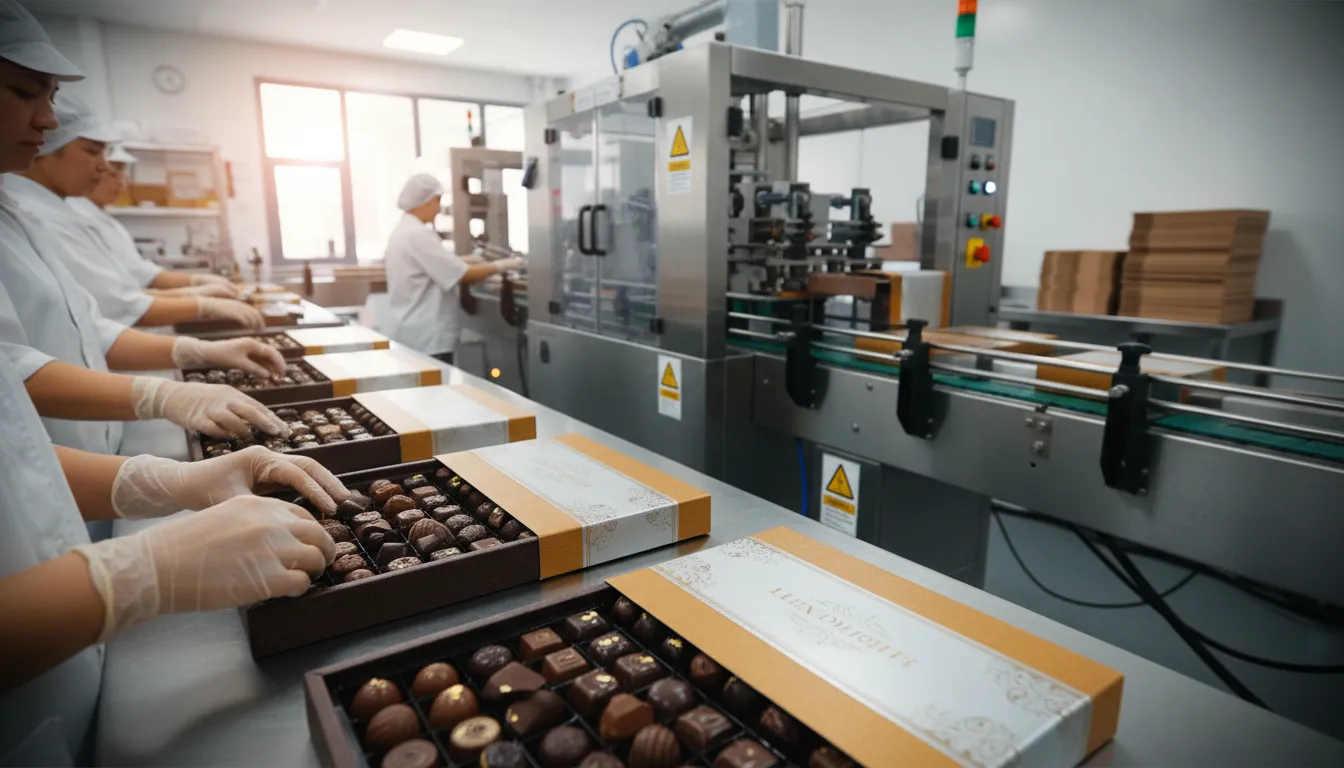
Target Northeast co‑packers and packaging converters that show rigid boxes, sleeves, and premium finishing for gifting and travel retail.
United States — Colorado
Shortlist craft and better‑for‑you co‑packers with small‑batch flexibility and willingness to run test batches for niche concepts.
United States — Maine
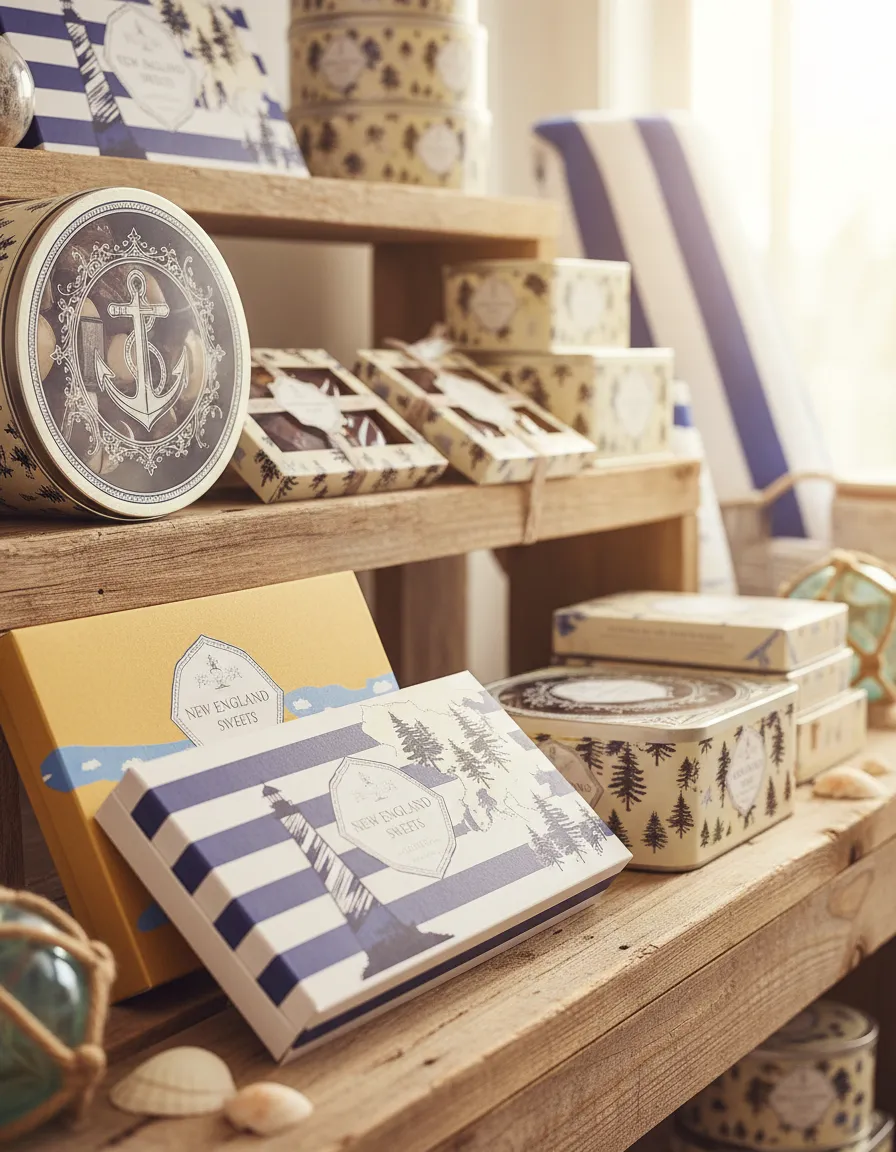
Look to New England artisan listings for souvenir assortments, gift tins, and strong summer shipping experience to resort locations.
United Kingdom — contract manufacturers
Use UK trade associations and the BRCGS directory to find contract manufacturers experienced with HFSS scoring, UK/EU labeling and retailer technical standards.
Spain — private‑label options
Search regional private‑label directories and export listings for Spanish suppliers that offer bilingual packs and EU labeling expertise.
Publicly listed vs. private suppliers
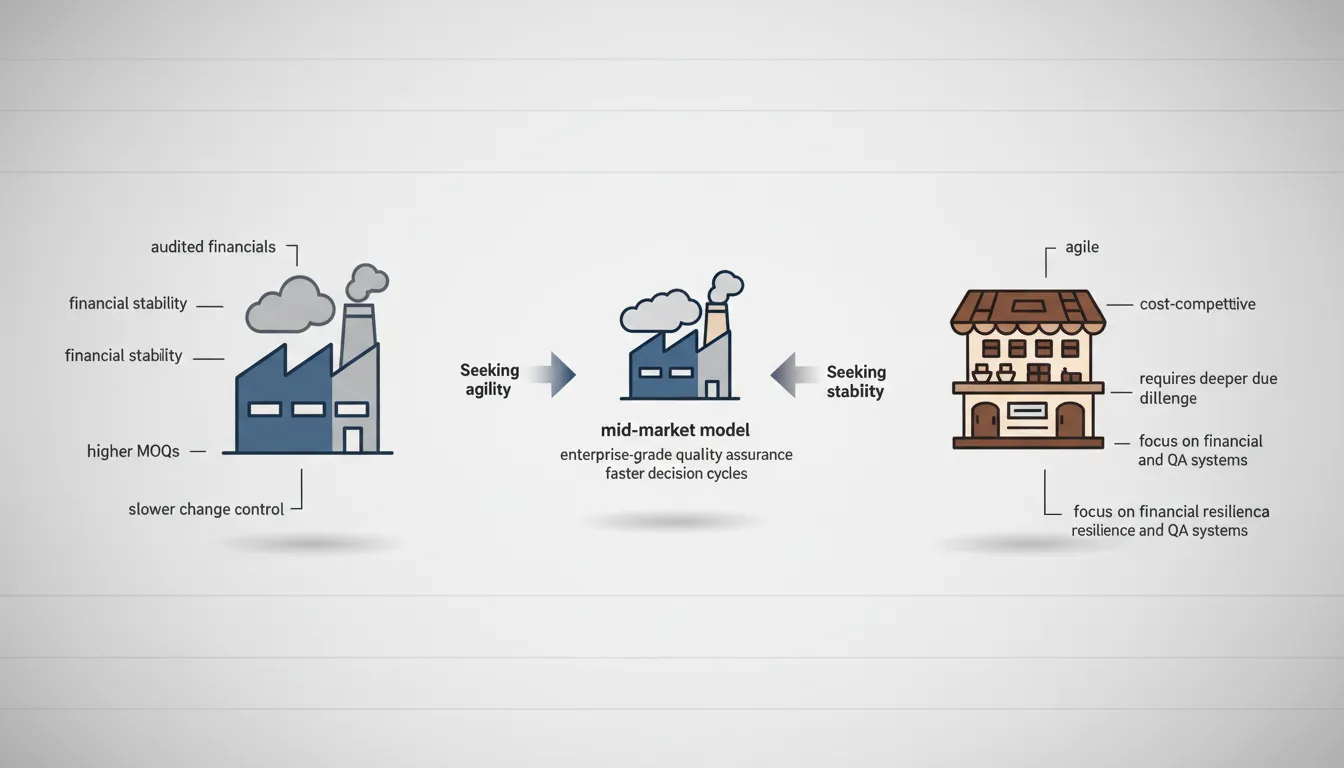
Listed manufacturers typically offer audited financials and stability but may set higher MOQs and slower change control. Private or family‑owned suppliers can be more agile and cost‑competitive but require deeper due diligence on financial resilience and QA systems. Our mid‑market model pairs enterprise‑grade QA with faster decision cycles.
Benchmarks and inspiration (retailer private label)
Use successful premium private‑label ranges—private selection chocolate is a useful neutral benchmark for positioning, pack quality, and price tiers. Ask shortlisted manufacturers for a low‑risk sample run that matches those standards before committing to scale.
Choosing the right country for your program (decision matrix)
Match program intent (budget vs premium) against operational priority (speed vs scale) and let regional strengths guide your choice.
| Program Intent \ Priority | Speed‑first (faster launches) | Scale‑first (large repeat volumes) |
|---|---|---|
| Budget program | US domestic co‑packers for rapid tests and reduced cold‑chain exposure | West African hubs (Côte d’Ivoire, Ghana) for cost‑efficient base chocolate and high volumes |
| Premium program | US or European makers (BE/CH/IT/ES/UK) or Ecuador for fast premium runs with provenance | European hubs and Ecuador for premium ranges rolled out across regions |
Move one pilot SKU through a guardrailed path—defined MOQ, artwork lock, and lead‑time bands—then follow a pilot → scale plan. Book a short sourcing workshop with our team to refine your pilot brief and map critical milestones.
Frequently Asked Questions
Which country is known for chocolate? Multiple countries are associated with chocolate—Belgium, Switzerland, Ecuador, Côte d’Ivoire and Ghana, Italy, the UK, and the U.S. For private‑label buyers, the right origin depends on target price per kilo, production capacity, certifications (e.g., Rainforest Alliance/Fairtrade), customization needs, and logistics.
Which country is the land of chocolate? Switzerland is often called the “land of chocolate” due to its historic role in milk chocolate development, high per‑capita consumption, and export‑oriented manufacturers. For procurement, this suggests premium positioning, rigorous quality systems, and strong travel‑retail and gifting capabilities.